
Understanding and implementing advanced automatic control systems in freeze-dryers (lyophilizers) is essential for pharmaceutical and biotech manufacturers aiming for consistent product quality, high throughput, and regulatory compliance. This article examines the key components of automatic control systems in freeze-drying machines, how they support the lyophilization process, and best practices for integration, monitoring, and validation.
What Automatic Control Systems Encompass
Automatic control systems in a modern freeze-dryer typically include the following elements:
-
Programmable logic controllers (PLCs) which manage real-time process sequences, interlocks, alarms, and equipment state changes.
-
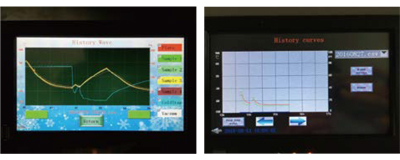
Human-machine interfaces (HMIs)/touch-screens for recipe selection, user input, real-time displays of shelf, product, condenser temperatures, vacuum levels, and historical trend curves.
-
Automation of process phases: freezing, sublimation (primary drying), desorption (secondary drying), stoppering/sealing, and defrosting, often with stored “recipes” that define temperature ramps, vacuum levels, shelf set-points, and hold times.
-
Data recording and reporting modules: logging of each batch’s key parameters (temperatures, pressures, vacuum, times, alarms) to support GMP/GLP documentation, process validation, and traceability.
-
Advanced sensors and control loops: such as dual vacuum sensors (Pirani + capacitance), shelf and product thermocouples, condenser temperature sensors, and optional product resistance sensors (for endpoint detection) that feed to PID (proportional-integral-derivative) or model-based control algorithms.
-
Remote access, alarm notification, and system protection: including password access control, user levels, automatic fault diagnostics, email or SMS alerts for deviations, hardware interlocks (e.g., vacuum loss triggers shelf heater shutdown) and recovery routines.
Why Automatic Control Matters for Lyophilization
Automatic control systems deliver multiple benefits:
-
Consistent Product Quality: By executing defined recipes with minimal human intervention, machines reduce cycle-to-cycle variability and ensure each batch meets target residual moisture, cake structure, and re-constitution behaviour.
-
Cycle Optimization and Throughput: Intelligent control systems can detect the end of primary drying (e.g., via dual sensor difference) and automatically transition to secondary drying, reducing idle times and overall cycle length.
-
Regulatory Compliance & Documentation: As freeze-drying is a critical part of aseptic and parenteral manufacturing, full data logging and controlled access support compliance with GMP, 21 CFR Part 11, and other standards.
-
Reduced Operator Errors: The system can lock out operator manual overrides or deviations, ensure safety interlocks are honoured, and protect against mis-loading or incorrect program selection.
-
Energy Efficiency and Equipment Protection: Automatic control of refrigeration, vacuum pump scheduling, defrost cycles, and shelf ramping can reduce energy consumption and equipment wear.
Key Control Features & Functionalities
Recipe Management and Multi-Segment Profiles
Freeze-dryers support multi-segment control profiles (e.g., pre-freeze hold, shelf cool-down, ramp to primary drying temperature, hold phase, ramp to secondary drying temperature, hold, backfill or inert gas). Machines may allow dozens of segments and hundreds of saved recipes. Some systems store 32 or more programs with up to 36 segments each.
Endpoint Detection & Transition Logic
Advanced systems incorporate algorithms or sensor logic to detect when primary drying is completed — e.g., when product temperature stabilizes near shelf temperature or when difference between two vacuum sensors falls below a threshold. At this point the system can automatically ramp to secondary drying.
Interlock and Safety Logic
The PLC monitors critical parameters and enforces interlocks such as:
-
Vacuum loss → stop shelf heating and alert operator.
-
Condenser too warm or saturated → reduce sublimation load.
-
Over-temperature → alert and optionally shutdown.
-
Refrigeration or vacuum pump fault → safe-stop cycle to protect product.
Data Logging, Audit Trail & Remote Monitoring
Each cycle’s data (temperatures, vacuum, times, alarms) is stored, sometimes exported via USB, Ethernet, or cloud-enabled systems. Many controllers include audit trails, user login/logout event records, and remote accessibility for maintenance or monitoring.
User Access and Control Hierarchies
Systems implement user privilege levels (e.g., operator, supervisor, engineer), password protection, program lock-out, and batch record print-out or export. This helps control who can change recipes, alarms, or user settings.
Integration into Pharma Freeze Drying Lines
Equipment & Facility Interfaces
When specifying a freeze dryer in a pharmaceutical environment, ensure the automatic control system interfaces properly with:
-
MES/SCADA systems for real-time monitoring and trending.
-
Clean-room classification and GMP documentation flows.
-
Material handling and stoppering systems if integrated (e.g., vial loading/unloading, inert gas back-fill).
-
Validation practices (IQ/OQ/PQ) — the control system must support traceability of parameter changes, calibration records, and documented recipes.
Choice of Sensors and Redundancy
Recommended sensor configurations include:
-
Two vacuum sensors (Pirani + capacitance) for reliable vacuum measurement.
-
Product temperature probes on each shelf or sample vials to detect endpoint reliably.
-
Condenser temperature and frost build-up monitoring.
-
Shelf temperature sensors (surface) and circulating fluid sensors (for oil/heater systems).
Redundancy and calibration routines are vital to avoid false readings and ensure process integrity.
Software and Validation Requirements
-
Control software should comply with GAMP 5 principles, be version controlled, and support audit trails.
-
Validation scripts should cover recipe integrity, alarm reaction, program transitions, and data export / backup functionality.
-
The control system should support sealed recipe storage to avoid unintended modifications.
-
Batch report generation (PDF/CSV) and data archiving must be part of the system.
Optimization & Continuous Improvement
Automatic control systems also support process optimization:
-
Use software algorithms (such as “Auto-Dry”) that adapt shelf temperature ramping based on real-time product data to shorten drying time.
-
Scenario modelling and simulation (e.g., using mixed‐index differential algebraic equations) can help optimize control policy for lyophilization.
-
Data trending and analytics identify trends (e.g., slower sublimation over time) and drive preventive maintenance.
Best Practices for Implementation
-
Define Clear Production Recipes: Document freezing, primary drying, secondary drying parameters, vacuum profiles, and end-point criteria.
-
Ensure Control System Training: Operators and engineers must be trained on recipe loading, segment editing, alarm response, and data export.
-
Calibrate and Maintain Sensors: Ensure regular calibration of thermocouples, vacuum sensors, and shelf temperature sensors.
-
Validate Recipes and Transitions: Confirm that the logic for phase transitions (freezing → primary drying → secondary) works correctly and robustly.
-
Backup and Archive Data: Ensure all batch data and recipes are backed up and archived, aligned with GMP/21 CFR standards.
-
Leverage Remote Monitoring & Alerts: Use Ethernet/SCADA connectivity and automated alerts (SMS/email) for real-time notifications of critical deviations.
-
Use Data for Predictive Maintenance: Monitor parameters like vacuum pump oil consumption, cycle times, and condenser frost accumulation to plan maintenance proactively.
Summary
Automatic control systems in freeze-drying machines are the “brain” of modern lyophilization operations. They enable precise execution of complex multi-phase processes, support cycle optimization, enhance quality and consistency, and ensure regulatory compliance. By investing in proper sensor configuration, robust PLC/HMI interfaces, recipe management, data logging, and integration with maintenance/analytics systems, pharmaceutical and biotech manufacturers can achieve reliable, efficient and validated freeze-drying operations.