
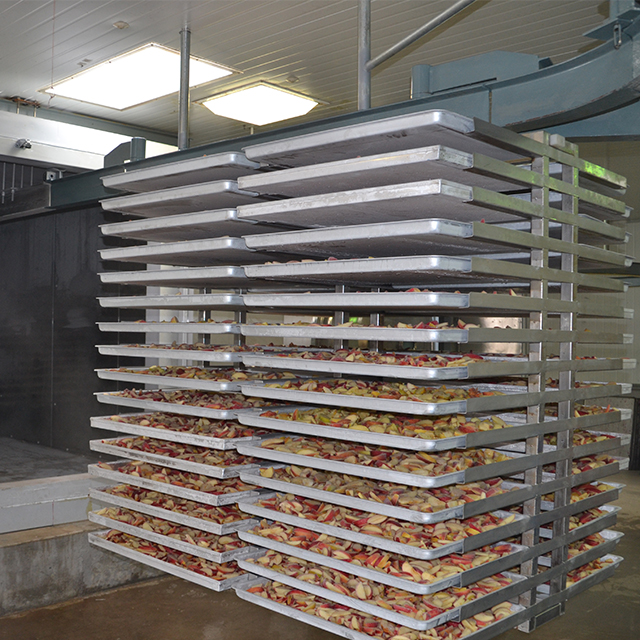
Shelves and trays are fundamental components of any freeze dryer, directly determining heat transfer efficiency, drying uniformity, product stability, and final batch quality. Although they appear simple, their engineering design influences almost every stage of lyophilization — from freezing to primary and secondary drying. For pharmaceutical, biological, food, and research applications, understanding how shelves and trays work is essential to optimizing cycle performance and ensuring product consistency.
Shelves act as thermally controlled platforms that regulate temperature and deliver heat to the product, while trays shape, contain, and distribute the product across each shelf. Together, they determine thermal uniformity, sublimation efficiency, and overall freeze-drying quality.
Introduction
Freeze drying (lyophilization) is a low-temperature thermal process used to preserve heat-sensitive materials, pharmaceuticals, vaccines, and food products. The process requires precise control of temperature, pressure, and heat transfer. In this controlled vacuum environment, shelves and trays are responsible for maintaining product geometry, delivering energy to frozen materials, and ensuring drying consistency across the entire load. Their design and material selection significantly impact drying time, final moisture content, and structural integrity of the dried product.
Functional Role of Shelves in Freeze Drying
Thermal Energy Transfer
Shelves provide the primary heat source during freeze drying. They deliver energy to frozen materials mainly through conduction, supported slightly by radiation. Because convection is negligible under vacuum, shelf quality and thermal uniformity become essential. Any temperature variation on a shelf can lead to inconsistent drying between trays.
Temperature Control Throughout the Process
Shelves are controlled by circulating heat transfer fluid (such as silicone oil) that adjusts temperature during:
-
Freezing – cooling shelves rapidly to form ice crystals
-
Primary drying – setting controlled temperatures to sublimate ice
-
Secondary drying – raising temperature to remove bound moisture
The programmable shelf temperature profile ensures repeatable drying cycles, product stability, and GMP compliance.
Mechanical Strength and Load Distribution
Industrial freeze dryers may support hundreds of kilograms of product. Shelves must remain:
-
Flat
-
Rigid
-
Uniformly supported
-
Resistant to cyclic thermal expansion
Poor structural design leads to sagging shelves, uneven conduction, and unsafe loading conditions.
Integration with Stoppering (for Vial Lyophilizers)
In pharmaceutical lyophilization, the upper shelf functions as a stoppering plate, sealing vials under vacuum. This requires:
-
High flatness tolerance
-
Smooth and controlled vertical movement
-
Sufficient mechanical force
These features ensure container-closure integrity and prevent vial breakage.
Functional Role of Trays in Freeze Drying
Product Containment and Dimensional Control
Trays are used to hold:
-
Bulk liquids
-
Semi-solids
-
Solutions for sterile injectable production
-
Biological materials
-
Food slices or puree layers
They define product thickness and surface area, directly impacting sublimation speed.
Thermal Conductivity and Heat Transfer
Trays maximize contact with shelves to ensure efficient conduction. The best trays:
-
Fit tightly on the shelf
-
Have uniform thickness
-
Maintain flatness during freezing
-
Provide good thermal contact
Poorly fitting trays slow drying, create hot and cold zones, and reduce product quality.
Material Compatibility
Common tray materials include:
-
Stainless steel – durable, GMP-compliant, sterilizable
-
Aluminium – excellent thermal conductivity
-
Food-grade plastics – used in non-pharmaceutical applications
Material selection must balance conductivity, strength, cleanability, and operating temperature range.
Prevention of Contamination and Product Loss
Trays prevent product overflow and contamination. Their side walls, surface finish, and geometry must be designed to:
-
Hold liquid securely
-
Prevent cross-contamination
-
Allow easy cleaning and validation
-
Avoid particle shedding
This is critical in GMP-grade facilities.
How Shelves and Trays Influence Freeze-Drying Performance
Drying Uniformity Across Batches
Uniformity depends on:
-
Shelf temperature accuracy
-
Tray material conductivity
-
Shelf-to-tray contact quality
-
Product fill height consistency
Any variation causes uneven moisture content, inconsistent cake structure, or extended cycle duration.
Impact on Cycle Time and Efficiency
Efficient heat transfer shortens:
-
Freezing time
-
Sublimation duration
-
Secondary drying
Good shelf and tray design can reduce total cycle time by 10–30%.
Final Product Structure and Stability
Shelves and trays affect:
-
Ice crystal formation
-
Cake porosity
-
Product collapse temperature exposure
-
Reconstitution speed
Stable thermal profiles preserve product integrity and improve pharmaceutical quality.
Load Configuration and Throughput
Optimizing tray/shelf arrangement increases loading capacity and ensures:
-
Maximum use of chamber space
-
Even airflow and vapor escape
-
Stable pressure gradients during sublimation
Proper load distribution reduces processing variability.
Best Practices for Selecting Shelves and Trays
Choose Shelves with Excellent Thermal Uniformity
Look for ±1°C or better uniformity to avoid drying inconsistencies.
Match Tray Material to the Application
-
Pharmaceutical: stainless steel or aluminium
-
High-performance heat transfer: aluminium
-
Non-pharma foods: plastic or coated materials
Ensure Perfect Shelf-to-Tray Contact
Avoid warped trays, dented shelves, or improper tray sizing.
Maintain Uniform Fill Volume
Product thickness is one of the strongest determinants of cycle time.
Clean and Inspect Shelves Regularly
Scratches, dents, and contamination reduce thermal performance and complicate validation.
Related Topics and Detailed Answers
Why is shelf flatness critical in industrial freeze dryers?
Shelf flatness ensures uniform contact between the tray and surface. Warped or uneven shelves reduce conduction, resulting in longer drying cycles and inconsistent moisture content across the batch.
What tray material is best for rapid freeze-drying cycles?
Aluminium trays offer superior thermal conductivity, improving heat transfer and shortening cycle time, making them ideal for fast or energy-efficient processes.
How does product fill height influence cycle performance?
Thicker product layers increase resistance to sublimation, slowing primary drying. Maintaining consistent fill height across all trays ensures uniform drying and prevents under- or over-drying.
Summary
Shelves and trays are vital elements in freeze-drying performance. Shelves deliver controlled heat and support mechanical loads, while trays shape, contain, and stabilize the product. Their design, material, and maintenance significantly affect heat transfer efficiency, drying uniformity, cycle time, and final product integrity. By selecting appropriate materials, optimizing shelf contact, and maintaining consistent load configuration, manufacturers can achieve higher-quality outputs and greater operational efficiency.
Contact Us for Freeze Dryer Shelves, Trays, and Turnkey Lyophilization Solutions
Zhejiang Leadtop Pharmaceutical Machinery Co., Ltd (LTPM CHINA) provides:
-
Custom shelves and trays for freeze dryers
-
Industrial and laboratory freeze-drying equipment
-
Turnkey lyophilization systems
-
Five-year warranty and OEM spare parts
-
Engineering support for GMP-compliant freeze dryer upgrades