
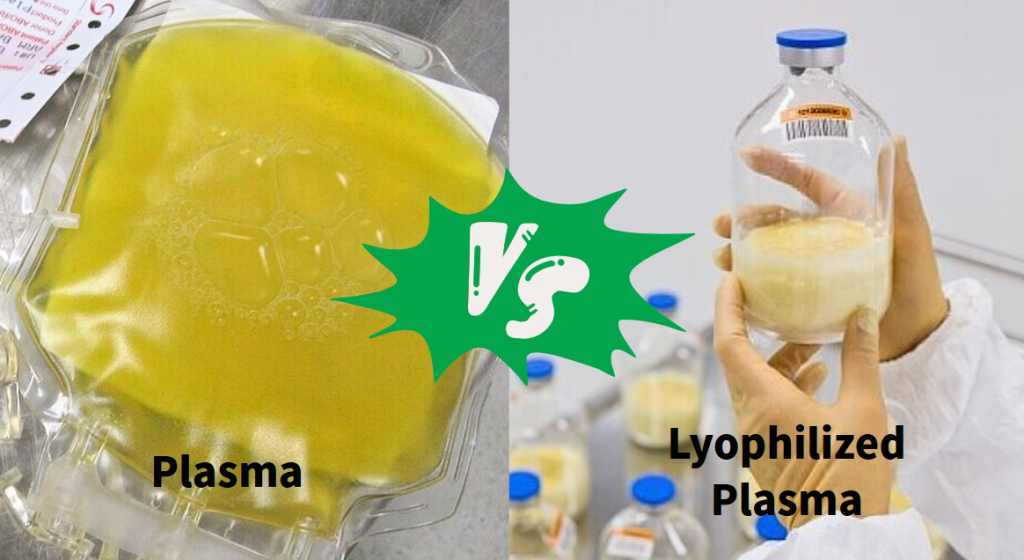
You may have heard of freeze-dried food, but can something as complex as blood undergo freeze-drying?
The answer is yes – but currently only plasma can be successfully freeze-dried and used in medical emergencies. As for red blood cells and platelets, the freeze-drying process remains under research due to technical limitations, meaning whole blood cannot yet be preserved through freeze-drying

What Is Freeze-Drying?
Freeze-drying is a dehydration process where a substance is first frozen, then placed under a vacuum, causing the ice to sublimate (turn directly from solid to vapor). This method preserves sensitive biological materials without the need for refrigeration, making it ideal for medical field applications.
Why Freeze-Dry Blood?
- Longer Shelf Life: Plasma can last 2 to 5 years at room temperature when freeze-dried.
- Easier to Transport: No need for refrigerators or freezers.
- Fast Use: Just add sterile water, and it’s ready in minutes.
Freeze-Drying vs Traditional Blood Preservation
| Feature | Freeze-Dried Blood | Traditionally Preserved Blood |
|---|---|---|
| Storage Temperature | Room temperature (15–25°C) | Refrigerated (1–6°C) or frozen (-18°C) |
| Shelf Life | 2–5 years | Plasma: 1 year frozen; RBCs: 42 days |
| Logistics & Transport | Lightweight, no cold chain | Requires cold storage and handling |
| Reconstitution Time | 5–10 minutes with sterile water | Not applicable |
| Use Case | Emergency, military, mobile clinics | Hospitals with full lab infrastructure |
| Cost of Equipment | Higher (lyophilizer required) | Lower |
| Stability During Crisis | High (heat stable) | Low (prone to spoilage in power outage) |
Conclusion: Freeze-dried plasma is great for situations where you can’t use refrigerators. Traditional methods are still best for hospital settings with full facilities.
Which Blood Components Are Freeze-Dried?
| Component | Freeze-Dried? | Use Case | Notes |
|---|---|---|---|
| Plasma | ✅ Yes | Emergency, military, trauma care | FDA-approved (US military use) |
| Red Blood Cells | 🧪 In research | Experimental | Cell membranes are hard to preserve |
| Platelets | 🧪 In research | Experimental | Platelet function is difficult to maintain |
| Whole Blood | ❌ No | Not available | Too complex for current tech |
If you’re making pharmaceuticals, biologics, or blood-based products, freeze-drying is a smart solution. It extends shelf life, makes transport easier, and keeps products safe for longer. That’s why more companies are investing in industrial freeze dryers made for sensitive medical materials.
Related Topics and Answers
1. Can Red Blood Cells Be Freeze-Dried?
Not yet for human use. Preservation of cell integrity and oxygen-carrying capacity is difficult. Research continues using cryoprotectants and membrane stabilizers.
2. What Equipment Is Used to Freeze-Dry Blood?
High-performance pharmaceutical freeze dryers (lyophilizers) with precise temperature control and sterile chamber conditions.
3. Is Freeze-Dried Plasma Safe?
Yes, if produced under GMP conditions and subjected to pathogen inactivation processes. Products must meet regulatory approval (FDA, EMA, etc.).
4. How Long Can Freeze-Dried Plasma Last?
Typically 2–5 years at ambient temperature, depending on packaging and storage environment.
5. Can Freeze-Dried Blood Be Used in Civilian Hospitals?
In some countries, yes. France, Germany, and Israel have civilian access to FDP. In the U.S., it’s currently limited to military and investigational use.
Summary
Freeze-dried plasma is a powerful tool for emergency medicine. It’s easy to store, carry, and use, especially where cold storage isn’t available. While red blood cells and whole blood are not freeze-dried yet, scientists are working on it.
This technology is opening new doors for medical aid in remote areas, disaster zones, and military medicine.
Are you developing biologics, vaccines, or emergency-response medical kits? Our GMP-compliant pharmaceutical freeze dryers are ideal for customized blood and plasma processing.

Contact our engineering team for tailored consultation.